Description
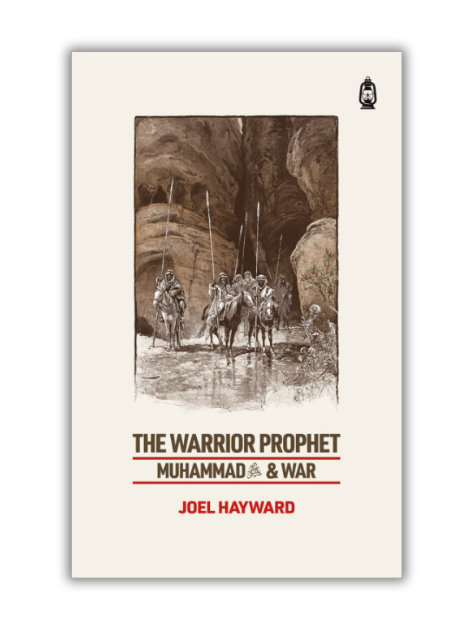
The Prophet Muhammad was continuously at war for a decade and initiated around eighty armed missions, twenty-seven of which he led himself. Yet, most Islamic biographies deal with this issue by using an understandable but insufficient logic: that because Muhammad, as the Messenger of Allah, was the ideal and paradigmatic human, he must have been an ideal and paradigmatic military commander. Following this logic and wanting Muhammad’s behavior to conform to modern ethical concepts and widespread (but not necessarily accurate) beliefs about the nature of war, writers have created a narrative which, in significant ways, departs from the account clearly and consistently revealed in the earliest extant Arabic sources. The writers’ narrative also removes the Prophet from his historical and cultural context and the realities of the harsh and competitive tribal society in which he lived.
A committed Muslim himself, Professor Joel Hayward agrees that Muhammad was a moral and decent man who saw peace as a highly desirable state in which humans should live and as a goal worth pursuing. Yet Hayward has approached the Prophet’s understanding and employment of warfare from a different vantage point. He has painstakingly scrutinized the earliest Arabic sources impartially according to the strict standards of historical inquiry in order to ascertain whether Muhammad’s actions, habits and methods can — when understood within their original seventh-century stateless Arabian context — provide any substantial and meaningful insights into the way that he understood and undertook warfare.
Hayward concludes that Muhammad was an astute, situationally aware and self-reflective man who created and communicated a believable strategic vision of a necessary and desirable future. That vision persuaded increasing numbers of people to follow him and risk everything willingly in the struggle to create the optimal conditions for their survival, security, and prosperity. In a competitive and conflictual environment with ubiquitous threats, warfare was necessary to make real the bold new world that he foresaw.
Through original, meticulously researched and rigorous analysis, Hayward covers all the raids and campaigns and demonstrates that Muhammad correctly understood the necessity and utility of force and duly developed into an intuitive, effective and victorious military practitioner who developed and enforced a strict moral code so as to attain his goals whilst safeguarding the innocent.
Format: Hardback, 457 Pages




Reviews
There are no reviews yet.